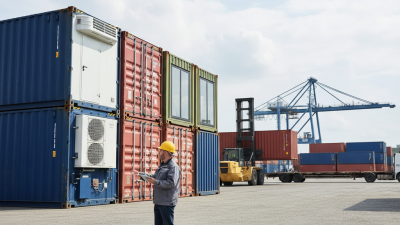

An empty shipping container may look like nothing more than a steel box waiting beside a warehouse. In practice, it is a valuable logistics asset, a storage unit, and a marker of global trade imbalance. Its doors may be open, but its transport history is rarely simple. A container can arrive at a port after delivering electronics, furniture, machinery, or food-grade packaging. Then, it must be inspected, cleaned, documented, and repositioned before serving another shipper.
Industry analyst John Fossey has described empty containers as “a symptom of imbalance in global trade.” This observation explains why empty equipment matters so much. Trade lanes rarely carry equal volumes in both directions. A port may receive thousands of imported containers while exporting far fewer goods. The unused boxes then occupy yard space, require handling, and may travel hundreds of kilometers without cargo. That movement costs fuel, labor, time, and planning capacity.
For beginners, the term can sound misleading. Empty does not mean worthless. It means temporarily without cargo. Condition matters. A small dent may be harmless, while damaged flooring, leaking seals, or poor ventilation can make a unit unsuitable. Operators also consider size, ownership, location, and inspection records.
The process is not perfectly efficient.
This is where the industry still needs improvement. Better forecasting, shared equipment platforms, rail coordination, and local reuse can reduce unnecessary repositioning. However, no single solution removes every imbalance. Understanding an empty shipping container means looking beyond its steel walls. It means examining the decisions, delays, and infrastructure surrounding it.
What Is an Empty Shipping Container?
Definition and Basic Characteristics of an Empty Shipping Container
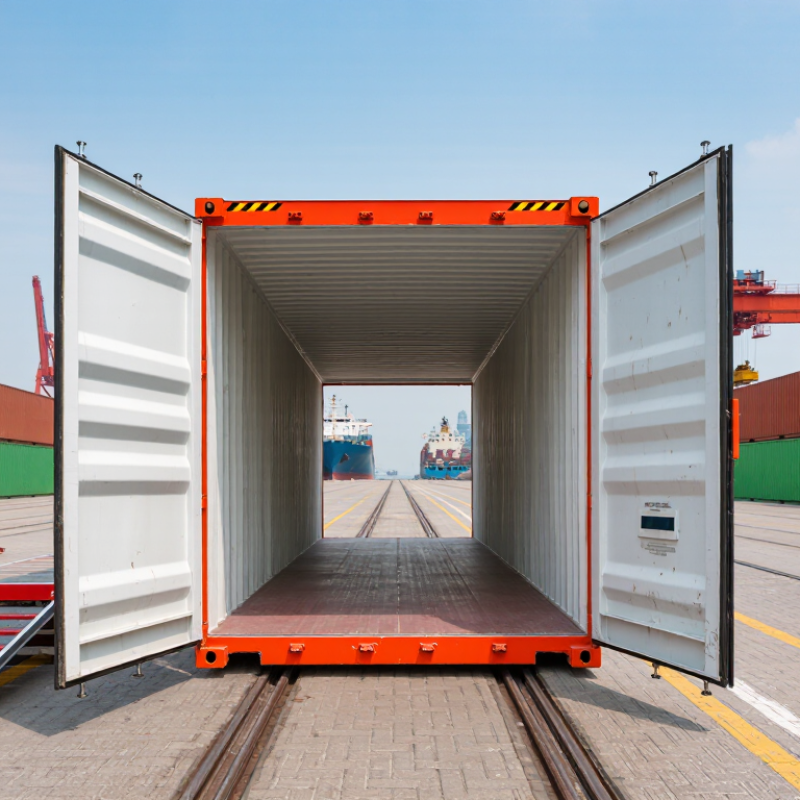
An empty shipping container is a standardized cargo unit without goods inside. It may be waiting at a port, depot, warehouse, or factory. Empty does not always mean unused. Many containers return after several transport cycles and show minor dents, faded paint, or floor marks.
Most units have corrugated steel walls, a strong roof, locking doors, and a treated wooden floor. Common lengths include 20 feet and 40 feet. Corner castings allow lifting and stacking equipment to handle the container safely. A visible identification plate records key specifications, inspection details, and maximum load information. These features support consistent handling across different transport systems.
In practical yard operations, an empty container still needs careful inspection. Workers check door seals, locking bars, floor condition, roof leaks, and unusual odors. A container can look sound outside but need repairs inside. That detail is easy to miss. An empty unit may also be classified as suitable for cargo, storage, or maintenance, depending on its condition and inspection record.
Tips: Photograph damage before moving the container. Keep the doors open briefly during inspection when conditions allow. Check the identification plate and verify the container’s tare weight. Do not assume a clean exterior proves complete readiness. A second inspection often finds small problems.
An empty shipping container is an ISO-standardized unit with no cargo inside. Its tare weight remains even when the container is unloaded, while its internal volume indicates the available cargo space.
Typical specifications shown for common dry containers: internal volume and tare weight vary slightly by manufacturer, door configuration, and construction. Dimensions and load limits follow widely used ISO container specifications.
An empty shipping container is not simply a metal box without cargo. It becomes empty when the previous shipment has been discharged and the unit is released for its next movement. The process usually starts at a port, warehouse, or inland depot. Workers remove remaining packaging, sweep the floor, check for moisture, and inspect the doors, roof, corner fittings, and locking bars. It is not ready yet.
A clean-looking container may still contain dust, odor, oil marks, or hidden floor damage. Depot staff record these details before assigning the unit to another shipment. Inspection photos, damage reports, and equipment numbers help create a reliable history. Small errors matter. A missed door seal or weak floorboard can create delays during loading.
Empty containers are commonly classified by availability and condition. An available empty is clean, dry, and suitable for cargo. A damaged empty needs repair before use. Some units remain in inspection status when their condition is uncertain. Others are withdrawn from service because repairs are not practical. Classification can also describe the container’s design, such as standard dry equipment, temperature-controlled equipment, or open-top equipment. These categories guide handling decisions, but they are not always perfect. Local procedures, cargo requirements, and inspection standards can change the final decision. A container marked “empty” may still need cleaning, repair, or approval before it travels again.
| Data Dimension | Classification or Data | Typical Specification | Explanation |
|---|---|---|---|
| Basic Definition | Empty shipping container | A reusable intermodal freight unit with no cargo inside | It may be waiting for export cargo, repositioning to another location, undergoing inspection, or awaiting repair. |
| How an Empty Container Is Created | Cargo unloading completed | Cargo removed at a port, terminal, warehouse, or consignee facility | After unloading, the container is checked, cleaned when necessary, and recorded as empty in the operator's equipment system. |
| Container Condition | Cargo-worthy | Suitable for carrying cargo under applicable inspection requirements | The structure, doors, floor, roof, and fittings are considered fit for normal cargo transport. |
| Container Condition | Shipper-owned or line-use equipment | Use depends on ownership and operating agreement | An empty unit can remain in a carrier's equipment pool or be allocated for a particular shipper's future movement. |
| Container Condition | Damaged or repair-required | Not available for normal loading until approved | Damage may affect the frame, corner castings, doors, flooring, walls, roof, or safety markings. |
| Standard Length | 20-foot container | Nominal external length: 20 ft (6.06 m) | Often used for dense or heavy cargo because its allowable payload is reached with less internal volume. |
| Standard Length | 40-foot container | Nominal external length: 40 ft (12.19 m) | Provides approximately twice the nominal floor length of a 20-foot unit and is widely used for general cargo. |
| Height Category | Standard height | Nominal external height: 8 ft 6 in (2.59 m) | The common height category for dry freight containers. |
| Height Category | High-cube | Nominal external height: 9 ft 6 in (2.90 m) | Adds roughly 1 ft (30 cm) of height compared with a standard container and increases internal volume. |
| Common Container Type | Dry van | Enclosed container for general cargo | The most common type, normally fitted with solid walls, a roof, a wooden or composite floor, and end doors. |
| Common Container Type | Refrigerated container | Temperature-controlled equipment | An empty refrigerated unit may still require power, temperature monitoring, cleaning, and a pre-trip inspection. |
| Common Container Type | Open-top container | Removable or flexible top covering | Used for cargo that is too tall or difficult to load through standard doors. |
| Common Container Type | Flat rack | End walls with open sides and top | Designed for oversized, heavy, or irregularly shaped cargo and requires careful securing. |
| Container Weight | Tare mass | Usually about 2,200–2,400 kg for a 20-foot dry van; about 3,700–4,200 kg for a 40-foot dry van | Tare mass is the empty container's own weight. The exact value is printed on the container's safety and identification plate. |
| Weight Limit | Maximum gross mass | Commonly up to 30,480 kg for many standard dry containers | Maximum gross mass includes the container and its cargo; the permitted value depends on the unit's safety plate and applicable transport rules. |
| Available Payload | Cargo capacity | Maximum gross mass minus tare mass | The practical payload can be lower because of road weight limits, axle limits, cargo distribution, and route restrictions. |
| Operational Status | Available empty | Ready for release or booking | The unit has passed the required checks and can normally be assigned to an export or repositioning movement. |
| Operational Status | Under inspection or cleaning | Temporarily unavailable | The container is empty but cannot be released until condition, cleanliness, odor, and equipment requirements are confirmed. |
| Operational Status | Repositioning empty | Moved without commercial cargo | Empty repositioning balances equipment supply between locations where containers accumulate and locations where export demand is higher. |
| Identification | Container identification number | Four letters followed by seven digits | The standardized identification code distinguishes the individual unit and supports tracking, documentation, inspection, and interchange operations. |
What Is an Empty Shipping Container?
Common Uses of Empty Shipping Containers
An empty shipping container is a steel box without cargo, designed for repeated transport and handling. Most have double doors, a weather-resistant floor, and corner fittings for lifting. In practical use, condition matters more than appearance. A scratched wall may be harmless, while a bent door can cause leaks.
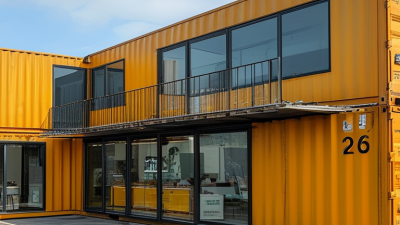
People often use empty containers for secure storage, tool rooms, workshops, and temporary site offices. A clean, dry unit can hold furniture, spare parts, or seasonal equipment. Some businesses convert containers into small retail spaces or covered work areas. Others use them for event storage, where quick loading is important. Ventilation should be added when temperature changes may affect stored materials. Insulation is useful too, but it reduces interior space. That trade-off is easy to underestimate.
Tips: Inspect the roof, floor, door seals, and locking bars before placement. Look for standing water, strong odors, and light entering through seams. Measure your largest item first. Leave a walking path inside. Place the container on level supports, not directly on soft ground. Ask a qualified technician before adding wiring, cutting walls, or installing heavy equipment. My own preference is simple: test the doors twice, even when the container looks new. Small details often become expensive problems later.
An empty shipping container carries no cargo, but it still needs careful handling. It may be waiting for inspection, cleaning, repair, or its next booking. These units often move through ports, rail yards, trucking depots, and private storage facilities. Their condition affects safety, scheduling, and transport costs.
Most empty containers stay in designated yards near ports or inland terminals. Stacked rows create narrow lanes for cranes, trucks, and inspection teams. Each unit usually has a recorded identification number, location, condition, and availability status. Staff check doors, floorboards, roof panels, corner posts, and locking parts. A container with a bent door may remain in a repair area instead of entering service.
Some companies use temporary storage yards during seasonal trade changes. These yards must control drainage, lighting, traffic flow, and stacking height. Poor planning can hide damaged units or cause unnecessary truck movements. That happens more often than people expect. Digital tracking helps, but workers still need to verify physical locations. Records can be wrong after weather events, rushed transfers, or manual entry errors.
Tips: Choose storage yards with clear access lanes and trained equipment operators. Ask how inspections are documented and how damaged containers are separated. Keep release instructions precise. Small details prevent delays. It is also wise to review yard capacity regularly, because an overcrowded site can slow every movement.
An empty shipping container has completed its delivery but still has value. It may wait in a depot, terminal, rail yard, or warehouse area. UNCTAD’s Review of Maritime Transport 2024 states that over 80% of global merchandise trade moves by sea. This scale creates a persistent imbalance: export regions may need boxes, while import regions hold too many.
The movement is expensive and surprisingly physical. A truck may carry a steel box for hundreds of kilometers with no cargo inside. Industry analyses using container trade statistics commonly estimate empty movements at roughly one-fifth of total container flows. Fuel, driver time, handling fees, and terminal storage still apply. The World Bank’s 2023 Container Port Performance Index assessed 405 ports, showing how port delays can disrupt equipment circulation. A delayed vessel can leave a factory waiting for a usable container.
Empty repositioning also faces uneven equipment quality. Salt air corrodes corner castings. Forklift impacts bend doors. Floors absorb moisture and odors. Reuse requires inspection, cleaning, repair, and accurate records. Minor defects become major delays when a container is needed immediately. Plans fail here. Digital tracking helps, but data is not always updated at the depot gate. A better system would match empty boxes with nearby exporters before long-distance repositioning begins. That sounds simple. It rarely is. Regional demand changes daily, and a container that looks available may already be reserved, damaged, or awaiting inspection.