

10 Tips for Buying a Small Shipping Container
Buying a small shipping container can look simple from a distance. You choose a size, check the price, and arrange delivery. In practice, small details can affect safety, storage space, and long-term costs. A container may appear sound outside while showing rust beneath its floor or moisture inside its roof seams. This guide explains ten practical tips for making a more informed purchase.
The right small shipping container depends on its intended use, available space, and local conditions. Measure the delivery path, not only the installation area. Gates, sharp turns, low branches, and uneven ground can create expensive problems. Ask the seller for external and internal measurements, steel condition, door operation, floor materials, and repair history. Recent photographs help, but an in-person inspection is more reliable. If inspection is impossible, request detailed videos and written answers.
Experience also teaches caution. I once underestimated how much clearance a container door needed after placement. That mistake affected daily access. Do not repeat it. Check whether the unit is wind- and watertight, structurally stable, and suitable for your planned storage needs. Confirm delivery fees, crane requirements, placement limits, ventilation, and any local permits before paying. A low price may hide transport, leveling, or refurbishment costs. These ten tips will help you compare sellers carefully, question attractive claims, and choose a small shipping container that remains practical beyond the first delivery day. Some decisions still require professional advice, especially when modifying the container or placing it on challenging ground.
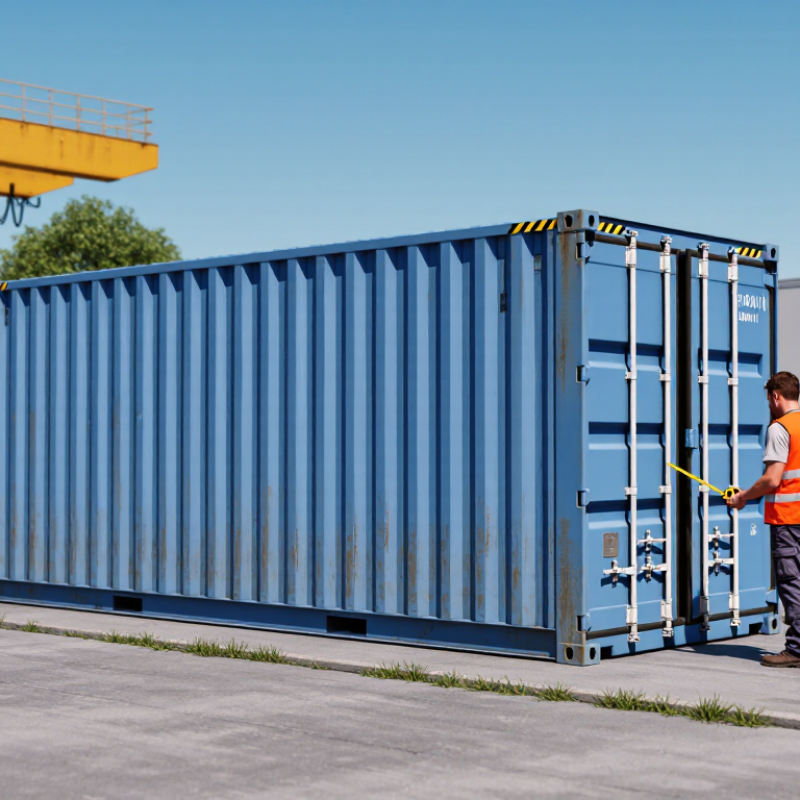
Determine the Right Small Container Size and Purpose
Choosing the right small shipping container starts with its purpose, not its exterior length. A garden tool store may need only an 8-foot unit. Household storage often suits a 10-foot container. A 20-foot unit offers more capacity, but it can waste space and complicate placement. Measure your goods, including pallets, shelving, and walking clearance. Then add roughly 10% spare room.
UNCTAD’s Review of Maritime Transport 2024 recorded about 858 million twenty-foot equivalent units in global container port throughput during 2023. That scale reflects a mature system, but small containers still vary considerably in design. ISO 668 sets standard external dimensions, while internal height, door width, floor condition, and payload can differ. Check the actual specification sheet. Do not trust the advertised length alone.
Purpose changes the buying decision. For tools, prioritize a wide door and dry flooring. For documents or household items, inspect ventilation and weather seals. For workshop use, confirm electrical planning separately and keep heavy loads near the floor. My first estimate was too optimistic. A compact unit filled faster than expected after adding shelves. Leave space for safe access. Also measure the delivery path, turning area, and ground slope before ordering. A perfect container may still fail at the gate.
10 Tips for Buying a Small Shipping Container - Determine the Right Small Container Size and Purpose
| Tip | Decision Area | Typical Data or Benchmark | What to Check Before Buying | Best-Fit Purpose |
|---|---|---|---|---|
| 1 | Match the container to the load volume |
8 ft: approximately 440–470 cubic feet 10 ft: approximately 560 cubic feet 20 ft: approximately 1,170 cubic feet |
Measure the packed goods, allow room for access and ventilation, and avoid filling every inch of the container. | Tools, seasonal items, small equipment, household storage, or workshop materials. |
| 2 | Confirm the external footprint | Most standard containers are about 8 ft wide and 8 ft 6 in high externally. Typical lengths include 8, 10, and 20 ft. | Measure the placement area, gate opening, turning space, overhead clearance, and delivery vehicle access. | Properties with limited space, narrow driveways, or restricted delivery access. |
| 3 | Check the usable internal dimensions | A standard internal width is usually about 7 ft 8 in, while internal height is commonly about 7 ft 10 in. Door openings are smaller than the internal space. | Compare the largest item’s length, width, and height with both the internal dimensions and door opening. | Bulky furniture, motorcycles, appliances, machinery, and palletized goods. |
| 4 | Select the appropriate height | Standard height: approximately 8 ft 6 in externally. High-cube units are approximately 9 ft 6 in externally and provide about 1 ft more internal height. | Verify local height restrictions, tree branches, utility lines, and whether stacked storage is planned. | Standard height for general storage; high-cube height for tall shelving or equipment. |
| 5 | Estimate weight and payload requirements | A typical 10 ft unit may weigh about 1,300–1,800 kg empty. A standard 20 ft unit may weigh about 2,200–2,400 kg empty. Maximum payload depends on the unit and transport rules. | Confirm the empty weight, maximum gross weight, floor rating, and delivery equipment limits. | Heavy tools, machinery, building materials, and dense inventory. |
| 6 | Choose a condition grade based on use |
New or one-trip: minimal wear. Cargo-worthy: suitable for transporting cargo when approved. Wind-and-watertight: generally intended for storage, subject to inspection. |
Inspect roof, corner posts, doors, seals, floor, locking bars, and visible corrosion. | Use new or cargo-worthy units for transport; storage use may allow a lower grade if watertight. |
| 7 | Evaluate door configuration | Standard end doors typically provide an opening about 7 ft 8 in wide and about 7 ft 5 in high, although exact measurements vary. | Measure access requirements and consider double-door or side-access configurations for frequent loading. | End doors suit occasional access; additional doors suit organized storage and regular inventory movement. |
| 8 | Plan for moisture and ventilation | Steel containers can experience condensation when temperature and humidity change. Passive vents improve airflow but do not make the unit climate-controlled. | Look for intact door gaskets, functioning vents, dry floors, and no active leaks. Use pallets or shelving to keep goods off the floor. | General storage, provided moisture-sensitive goods receive additional protection. |
| 9 | Prepare a stable foundation | Keep the container elevated and level on concrete, compacted gravel, or properly rated foundation supports. Uneven support can prevent doors from sealing correctly. | Check ground bearing capacity, drainage, local permits, and the delivery method before installation. | Long-term storage, site offices, workshops, and equipment protection. |
| 10 | Compare total ownership cost | The purchase price is only one component. Budget for delivery, crane or tilt-bed placement, foundation work, locks, shelving, ventilation, insulation, and possible permits. | Request a written quote that separates the container, transport, unloading, site preparation, modifications, taxes, and other fees. | Any buyer who wants a predictable budget and a container that is practical to use immediately. |
Related Posts
-
How to Choose a Large Shipping Container?
-

10 Shipping Container Buying Tips for Global Buyers
-

Discover the Benefits of Shipping Container Cabins for Your Needs?
-
Top 10 Creative Uses for Shipping Containers That Will Surprise You
-

Top 10 Uses for Shipping Containers You Never Knew About
-

Top 10 Shipping Container Innovations Transforming China物流行业?