
Choosing the best freight container manufacturers and suppliers in China requires more than comparing prices. It demands practical knowledge, verified production records, and careful attention to cargo protection. A reliable supplier should understand container dimensions, weather resistance, structural strength, and international transport requirements.
Malcolm McLean, the pioneer of modern containerization, once said, “I had this idea of taking the truck body off the chassis and putting it on a ship.” His idea changed global logistics. Today, Chinese manufacturers continue that development through steel fabrication, automated welding, corrosion control, and customized container designs. These details matter when containers face salt air, heavy lifting, uneven roads, and long storage periods.
A strong supplier should provide clear specifications, factory evidence, inspection reports, and responsive technical support. Buyers should examine corner castings, door seals, floor materials, paint thickness, and weld quality. Small defects can become expensive problems.
Price still matters. It should not lead the decision.
This guide will examine leading Chinese freight container manufacturers and suppliers by product quality, manufacturing capability, certifications, delivery performance, and customer experience. It will also consider a less comfortable truth: online claims can look impressive while actual production capacity remains unclear. Factory visits, independent inspections, and sample orders can reduce that uncertainty. No supplier is perfect. The best choice is the one that communicates limitations honestly, supports compliance, and consistently delivers containers suited to real operating conditions.
China remains central to the global freight container supply chain. UNCTAD’s Review of Maritime Transport 2024 recorded about 858 million TEUs in global container port throughput during 2023. TEU measures twenty-foot-equivalent capacity, not the number of physical boxes. This distinction matters when evaluating production demand.
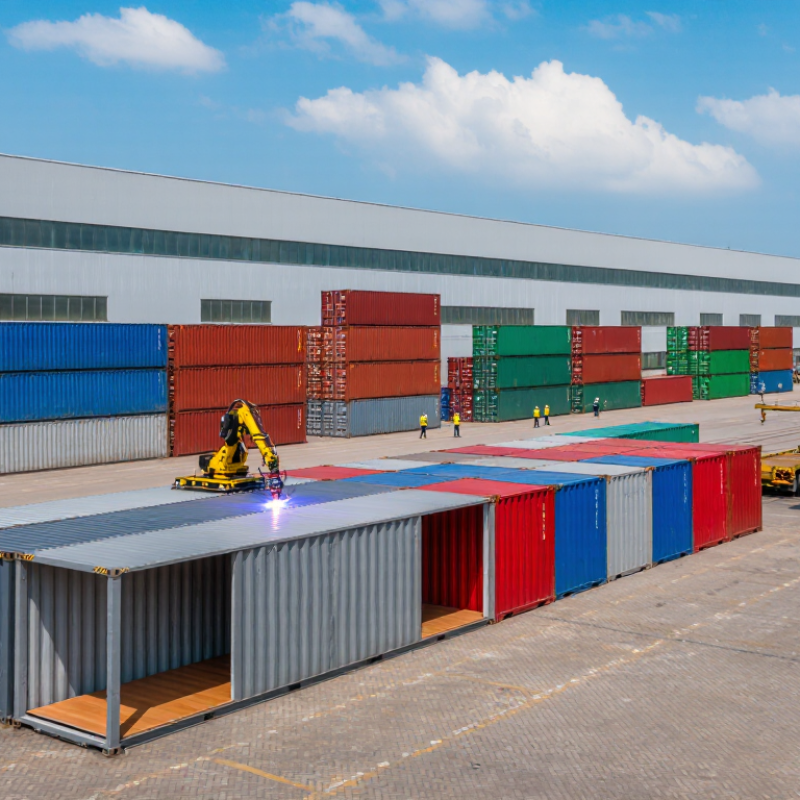
China’s factories serve shipping lines, leasing companies, and exporters across major trade routes. Industry estimates from Drewry’s Container Census and Leasing Annual Review 2024 show that new container production recovered as fleet replacement and cargo demand improved. China’s dense steel, machinery, and port networks support faster delivery and competitive manufacturing costs. However, demand is uneven. A box may leave a factory near the coast, travel inland by rail, and return empty after only one loaded trip. That imbalance still affects supplier profitability.
The picture is not perfectly clean. Forecasts can miss sudden trade shifts, port congestion, or weaker consumer spending. Buyers should examine production capacity, material traceability, inspection records, and repair support rather than relying only on quoted prices.
Tips: Compare TEU demand with actual container movements. Ask for recent test documents, coating specifications, and delivery evidence. Review total lifecycle cost, including repositioning, maintenance, and depot handling. UNCTAD data provides a useful market view, but local operating conditions deserve equal attention.
Choosing among freight container manufacturers and suppliers requires more than comparing prices. The container type must match cargo, handling equipment, and route requirements. ISO 668 defines common external dimensions, helping terminals and carriers work with predictable footprints.
A standard 20-foot container measures about 6.058 meters long, 2.438 meters wide, and 2.591 meters high. It suits dense cargo, machinery parts, and smaller shipments. A standard 40-foot unit keeps the same width and height but extends to about 12.192 meters. A 40-foot high-cube container also measures about 12.192 meters long and 2.438 meters wide. Its external height rises to approximately 2.896 meters, offering extra interior clearance.
Internal dimensions can differ slightly between suppliers. Door openings, corner castings, floor thickness, and allowable payload deserve careful checking. I have seen buyers focus on volume and overlook door height. That mistake can delay loading. Steel condition, weld quality, locking bars, flooring, and inspection records also reveal a supplier’s reliability. Dimensional tolerances matter, even when the listed figures look identical.
Tips: Confirm ISO compliance, CSC documentation, payload, and internal measurements before ordering. Ask for recent photos and a measured inspection report. Leave clearance around irregular cargo; the available space is never as generous as a brochure suggests. A supplier should explain these limitations clearly, not hide them behind a low quotation.
| Specification | 20-Foot General Purpose | 40-Foot General Purpose | 40-Foot High Cube |
|---|---|---|---|
| Common ISO designation | 20GP | 40GP | 40HC |
| Primary container type | Dry freight container | Dry freight container | High-cube dry freight container |
| Typical cargo applications | Dense or heavy cargo, machinery, cartons, and palletized goods | General cargo requiring greater floor length and loading capacity | Voluminous, lightweight cargo, furniture, garments, and machinery |
| External length × width × height | 6,058 × 2,438 × 2,591 mm 19 ft 10.5 in × 8 ft × 8 ft 6 in |
12,192 × 2,438 × 2,591 mm 40 ft × 8 ft × 8 ft 6 in |
12,192 × 2,438 × 2,896 mm 40 ft × 8 ft × 9 ft 6 in |
| Typical internal length × width × height | 5,896 × 2,350 × 2,393 mm | 12,032 × 2,350 × 2,393 mm | 12,032 × 2,350 × 2,698 mm |
| Typical door opening width × height | 2,340 × 2,280 mm | 2,340 × 2,280 mm | 2,340 × 2,585 mm |
| Approximate internal volume | 33.2 m³ | 67.7 m³ | 76.4 m³ |
| Approximate floor area | 13.9 m² | 28.3 m² | 28.3 m² |
| Typical tare weight | Approximately 2,200–2,400 kg | Approximately 3,700–4,000 kg | Approximately 3,800–4,200 kg |
| Typical maximum gross mass | Up to 30,480 kg, subject to the container safety plate and route limits | Commonly up to 30,480–32,500 kg, subject to the container safety plate and route limits | Commonly up to 30,480–32,500 kg, subject to the container safety plate and route limits |
| Typical payload range | Approximately 28,000–28,300 kg | Approximately 26,500–28,800 kg | Approximately 26,300–28,700 kg |
| Standard cargo door arrangement | Double rear doors | Double rear doors | Double rear doors |
| Floor construction | Marine plywood or equivalent flooring over steel cross members | Marine plywood or equivalent flooring over steel cross members | Marine plywood or equivalent flooring over steel cross members |
| Typical lashing equipment | Optional lashing rings or bars, depending on the build specification | Optional lashing rings or bars, depending on the build specification | Optional lashing rings or bars, depending on the build specification |
| ISO 668 dimensional category | ISO Series 1 freight container; 20-foot length class | ISO Series 1 freight container; 40-foot length class | ISO Series 1 freight container; 40-foot high-cube height class |
| Note: External dimensions follow commonly used ISO 668 nominal dimensions. Internal dimensions, tare weight, payload, door clearances, and volume may vary by manufacturer, structural design, flooring, fittings, and applicable CSC or road regulations. Always verify the container nameplate and technical drawing before purchase or loading. | |||
China’s best freight container manufacturers and suppliers should prove quality through documented testing, not attractive specifications alone. ISO 1496-1 defines structural requirements for general-purpose dry cargo containers. It covers tests for lifting, stacking, floor strength, wall resistance, and weather tightness. During inspection, engineers examine corner posts, welds, doors, locking rods, and floor panels. Small defects can become serious after repeated port handling.
The IMO’s Container Safety Convention requires approved containers to carry a valid CSC safety plate. It confirms that the unit passed recognized safety checks and remains subject to periodic examination. According to UNCTAD’s Review of Maritime Transport 2024, over 80% of global merchandise trade by volume moves by sea. That figure explains why container reliability matters across long voyages, cranes, railways, and highways. Still, a certificate is not a complete quality guarantee. Maintenance history, steel traceability, and repair workmanship need independent review.
Tips: Request ISO 1496-1 test records, CSC approval details, and recent inspection photographs. Check serial numbers against production documents. Ask how floor repairs are controlled. A supplier’s answer may reveal more than its brochure. Consider sampling several units before a large order. Even experienced buyers sometimes trust paperwork too quickly. That deserves reflection.
The chart shows nominal external lengths for widely used ISO freight container configurations. ISO 1496-1 covers design and testing requirements for series 1 freight containers, while CSC certification confirms that a container has passed the required structural safety examination for international transport. Dimensions shown are standard reference values, not test results or company performance ratings.
Choosing among China’s freight container manufacturers requires more than comparing prices. The strongest supplier is not always the largest factory. I have found that verified capacity matters more than impressive showroom photographs. Ask for recent production records, monthly output, equipment lists, and loading schedules. A factory producing several container types may struggle during peak demand. That risk needs honest discussion.
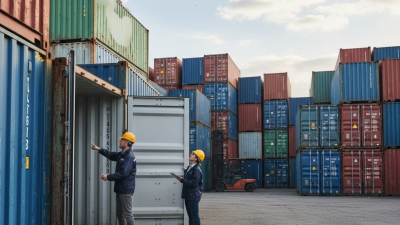
Material checks should cover steel grade, floor boards, corner castings, welding quality, and coating thickness. Request mill certificates and sample inspection reports. Walk around a finished unit. Look for uneven weld beads, damaged seals, or paint trapped around door hinges. Small defects often reveal weak process control. Specifications can look perfect on paper. Reality may differ.
Lead times should include material purchasing, fabrication, painting, inspection, and export preparation. Obtain a written timeline with approval points, not one broad delivery promise. An independent audit can review worker training, traceability, calibration records, fire protection, and corrective actions. Video calls help, but they cannot replace physical verification. One supplier I assessed had strong output but poor document control. That weakness delayed revisions and created avoidable confusion. I would also inspect a random production batch, rather than accepting only selected samples. Flexible suppliers may welcome scrutiny; defensive answers deserve a second look.
Selecting a China-based freight container supplier requires more than comparing catalog photos. Payload ratings should match your cargo, route, loading method, and local transport limits. Check the maximum gross mass, tare weight, and usable payload separately. Ask for test reports, steel specifications, weld inspection records, and dimensional tolerances. A container may look strong but perform poorly when doors, floors, or corner fittings are misaligned.
Pricing deserves a wider view. Compare material grade, paint system, customization, packaging, inland delivery, and inspection costs. Request an itemized quotation with currency, lead time, payment terms, and replacement conditions. The lowest offer is not always economical. I have seen buyers overlook floor treatment and later face avoidable maintenance expenses. That is an imperfect lesson, but a useful one. Warranty terms should state coverage periods, exclusions, evidence requirements, and response deadlines. A clear warranty is more reliable than a generous promise.
Tips: Test one sample before placing a large order. Record payload requirements in writing. Confirm spare-part availability and repair guidance. Ask who handles damaged units after delivery, and how quickly they respond. A practical supplier should provide traceable documents, inspection photos, and a named after-sales contact. If answers remain vague, pause the purchase. Reliability starts before production.