The Best 10 Uses for Second Hand Shipping Containers?
The versatility of second hand shipping containers is astonishing. Recent data from the Container Owners Association indicates that over 11 million shipping containers are in circulation globally. Their reuse can significantly reduce waste and promote sustainability in various industries.
Michael Thompson, an expert in sustainable construction, states, "Second hand shipping containers offer innovative solutions with minimal environmental impact." This reflects a growing trend towards eco-friendly building practices. Many businesses and individuals are discovering the potential uses of these containers. They can serve as affordable housing, pop-up shops, or even storage units.
Despite their advantages, challenges exist. Adapting shipping containers requires creativity and knowledge. Not all containers are suitable for construction or habitation. It is essential to assess structural integrity and insulation needs. As the industry evolves, the demand for second hand shipping containers will likely increase, driving further innovation.

The Growing Popularity of Second Hand Shipping Containers in Various Industries
In recent years, second-hand shipping containers have gained immense popularity across various industries. Their versatility makes them ideal for different applications. These containers are not just for shipping anymore. Many businesses find them useful for storage, mobile offices, or even pop-up shops.
The appeal lies in their affordability and durability. A second-hand container can significantly reduce costs compared to new structures. Many startups utilize these containers due to limited budgets. However, buyers must ensure the containers are in good condition. Issues such as rust and structural integrity can affect long-term usage.
Moreover, creativity with second-hand containers is expanding. Some entrepreneurs convert them into unique living spaces or trendy cafes. These projects often require careful planning and compliance with local regulations. While innovative, the process can lack standardization, leading to potential safety concerns. Materials and insulation methods may not always meet building codes. It is essential to evaluate these factors when embarking on such projects.
Cost Analysis: Economic Benefits of Utilizing Second Hand Shipping Containers
Second-hand shipping containers are emerging as a cost-effective resource for various needs. They are readily available and often cheaper than new containers. This economic benefit makes them appealing for businesses and individuals alike. The prices can vary, but they usually remain well below the cost of traditional building materials. This opens up possibilities for project budgets that may otherwise be too tight.
One significant advantage lies in their versatility. Whether for storage, conversion into homes, or even pop-up shops, the potential uses are vast. They can serve as temporary or permanent solutions, depending on specific requirements. However, it’s essential to consider the condition of the container before purchase. Some might require refurbishing, adding additional costs. A thorough inspection can save time and money in the long run, but not all buyers take this step seriously.
Shipping containers also support sustainability by recycling materials and reducing waste. This aspect is appealing for environmentally conscious consumers. However, the challenge lies in ensuring they meet local building codes. Sometimes, people underestimate the zoning laws that may affect usage. Navigating these regulations can lead to unexpected delays and expenses. It’s crucial to conduct research and possibly consult with experts in the field before making a final decision.
The Economic Benefits of Utilizing Second Hand Shipping Containers
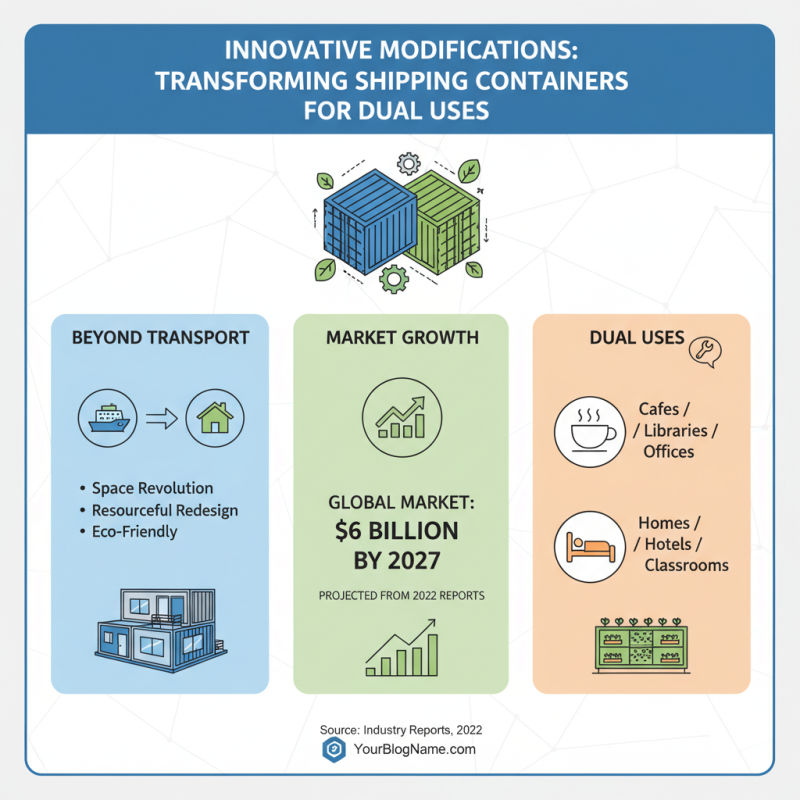
Innovative Modifications: Transforming Shipping Containers for Dual Uses
Shipping containers are not just for transport anymore. The innovative modifications are revolutionizing how we think about space and resources. As of 2022, reports indicate that the global market for modified containers is projected to reach $6 billion by 2027. This growth reflects the rising interest in eco-friendly and cost-effective solutions.
One of the most popular uses is for living spaces. People transform containers into stylish homes. They can be outfitted with modern amenities and sustainable features. A container home can cost around 30% less than traditional homes. They are energy-efficient, often equipped with solar panels. Yet, challenges remain. Insulation and ventilation require careful planning and expertise.
Another growing application is in retail. Businesses are converting containers into mobile shops or pop-up restaurants. This trend offers a unique customer experience. However, zoning laws and site selection can pose hurdles. Companies need to ensure compliance to avoid legal issues. Flexibility in design appeals to startups, but building regulations may vary widely. Attention to detail is crucial for success in this area.
Environmental Impact: Sustainability Benefits of Repurposing Shipping Containers
Repurposing second-hand shipping containers offers significant sustainability benefits. By transforming these durable structures, we reduce waste and limit the need for new materials. Each container that finds a new purpose represents a step towards minimizing our environmental footprint. For instance, using containers for homes or businesses can effectively decrease the demand for traditional construction supplies.
These containers can be converted into eco-friendly spaces. They can be used as offices, pop-up shops, or even community gardens. Such conversions help alleviate the housing crisis in urban areas. However, it is crucial to consider potential upgrades. Insulating containers effectively is necessary to ensure energy efficiency. This requires thoughtful design and planning, which some projects may overlook.
Not every container is a perfect fit for repurposing. Some may have structural issues or contamination concerns. Assessing their condition is vital to avoid future problems. If neglected, a repurposed container can lead to environmental harm rather than benefits. It’s essential to balance the excitement of innovation with rigorous standards, ensuring that every project is truly sustainable.
The Best 10 Uses for Second Hand Shipping Containers
| Use Case |
Sustainability Benefit |
Environmental Impact |
Cost Efficiency |
| Residential Housing |
Reuses materials, reduces landfill waste |
Lower carbon footprint compared to traditional building |
Affordable housing solution |
| Retail Spaces |
Minimal new materials needed |
Less resource extraction |
Lower startup costs for businesses |
| Offices |
Promotes adaptive reuse |
Saves traditional building materials |
Cost-effective leasing solutions |
| Workshops |
Utilizes existing structures |
Reduces demolition waste |
Lower setup costs for artisans |
| Community Centers |
Encourages social interaction |
Optimizes space in urban areas |
Inexpensive community resources |
| Storage Solutions |
Maximizes existing materials |
Less impact on natural resources |
Affordable and durable |
| Farming and Hydroponics |
Boosts local food production |
Reduces transportation emissions |
Lower costs for farmers |
| Pop-Up Restaurants |
Reduces waste by reusing containers |
Less land development |
Flexible cost management |
| Recreational Spaces |
Inspires unique, creative spaces |
Reduces urban sprawl |
Cost effective for cities |
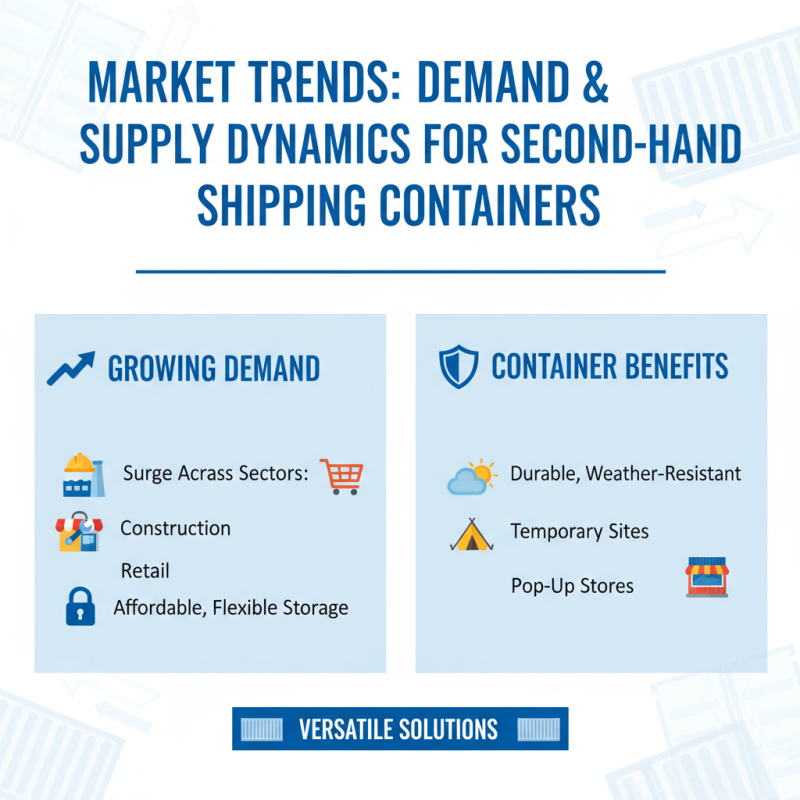
Market Trends: Demand and Supply Dynamics for Second Hand Shipping Containers
The market for second-hand shipping containers is growing. A surge in demand is evident across various sectors. Businesses, especially in construction and retail, seek affordable, flexible storage solutions. These containers are durable and weather-resistant. They provide an excellent option for temporary sites and pop-up stores.
Prices fluctuate based on location and condition. Containers that are well-maintained fetch higher prices. However, not all sellers are honest about container quality. Buyers often face a dilemma about whether to pay a premium for a trusted seller or risk a lower-priced option. Inspecting containers before purchase is crucial, but not always practical.
Repurposing containers for homes or offices is another trend. Still, regulatory hurdles can complicate these projects. Local zoning laws may not favor container adaptations. This often leads to unexpected delays and costs. Investors must be ready for these challenges, but creativity in design can yield rewarding outcomes. Proper research and planning remain essential for success in this evolving market.