

Choosing the right Non-Aging Foam Sandwich Panel can influence insulation, durability, safety, and long-term maintenance. A panel may look strong in a showroom, yet perform poorly under sunlight, moisture, or repeated temperature changes. This is why experienced buyers inspect more than thickness and price. They examine the foam core, facing materials, joint design, surface coating, and documented test results. A reliable supplier should explain thermal performance, fire behavior, water resistance, and expected service conditions clearly. Vague promises are warning signs.
These seven practical tips focus on details often missed during product selection. They consider real installation environments, including cold storage rooms, industrial walls, clean areas, and temporary buildings. Check whether the panel keeps its shape after transport. Ask how its edges resist moisture. Confirm that the declared performance matches recognized testing methods and local building requirements. Certifications matter, but they should be traceable and current. Look closely.
Some choices are not obvious. A thicker panel is not automatically better if the joints are poorly sealed. A cheaper facing may increase repair costs later. Even experienced purchasers can overlook fastener compatibility or condensation risks. That uncertainty deserves attention, not confident guessing. We will also consider supplier experience, technical support, replacement policies, and installation guidance. These details reveal whether the product is genuinely dependable or simply well advertised. The goal is a balanced decision based on evidence, site conditions, and realistic maintenance expectations. Performance should be verified, not assumed.
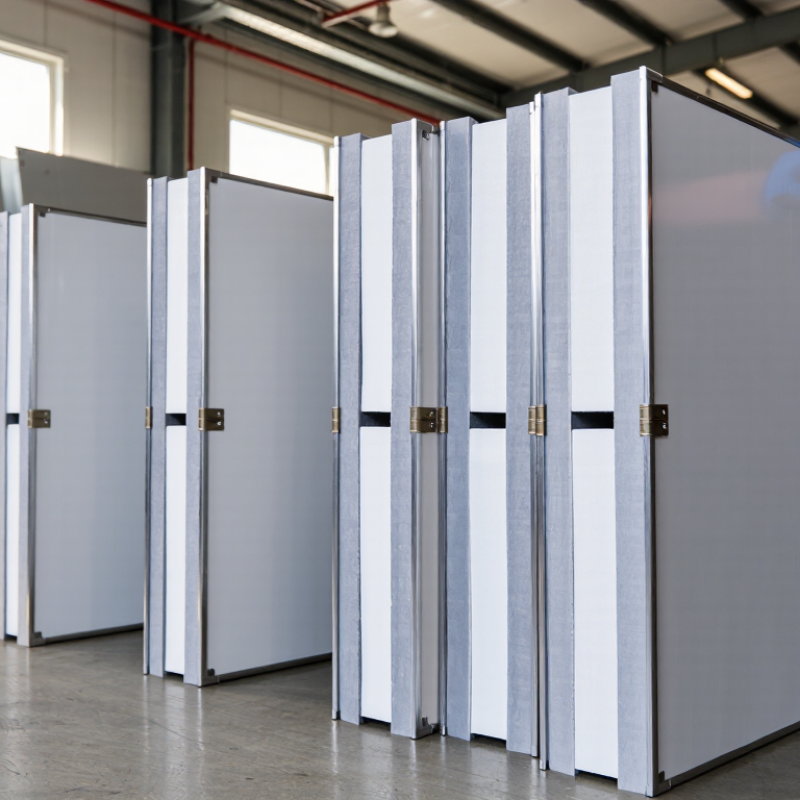
Non-aging foam sandwich panels are insulated building elements designed to retain their thermal performance over many years. They usually contain a rigid, closed-cell foam core between two protective facings. The facings provide strength, while the foam limits heat movement through the wall or roof.
Most cores use polyurethane, polyisocyanurate, or another engineered insulation foam. During production, the foam expands and bonds tightly to the facings. Its tiny cells slow conduction, and the sealed structure reduces air movement inside the panel.
Accurate joints also matter. Even a high-quality core can lose efficiency when gaps allow moisture or air leakage.
That wording can mislead.
“Non-aging” does not mean the panel lasts forever. Thermal performance may change slightly as gases move within the foam cells.
Good manufacturers support claims with laboratory aging tests, density data, and thermal-resistance measurements. Ask for these records before comparing products.
On a real installation, inspect the panel edges carefully. Damaged corners, wet storage, poor fasteners, and unsealed joints can reduce performance faster than normal aging.
Fire behavior, structural loads, condensation risk, and local building requirements also need professional review. A thicker panel is not automatically better if the joints are poorly designed. Choosing a panel means checking the whole system, not only the foam core.
7 Tips for Choosing Non Aging Foam Sandwich Panels
Evaluate core materials for long-term aging resistance, not only their initial insulation value. No foam is truly non-aging. Closed-cell polyurethane and polyisocyanurate cores can limit moisture movement, but their thermal performance may change as trapped gases diffuse over time. Request tested conductivity data after accelerated aging, not just fresh laboratory results. Tip: Compare aged values at the intended service temperature.
Inspect the core’s density, cell structure, and water absorption. A cut sample should show uniform cells, without crushed zones or visible voids. Even small gaps around panel joints can collect condensation and accelerate deterioration. Mineral wool does not experience gas diffusion, but it can absorb water if the facing or edges fail. Tip: Check dimensional stability after heat, humidity, and freeze-thaw exposure.
Ask for evidence from recognized test methods, such as thermal conductivity testing, dimensional-change testing, and reaction-to-fire evaluations. Also examine the facing material, adhesive, edge sealing, and joint design. These details often control real-world aging more than the foam alone. I have seen attractive panels perform poorly because moisture entered through unprotected edges. That detail is easy to miss. Tip: Review both core data and complete-panel test reports before selection.
7 Tips for Choosing Non Aging Foam Sandwich Panels
Compare Thermal Insulation and Energy Efficiency
Tip 1: Check the declared thermal conductivity, not only the advertised insulation rating. Lower conductivity usually means better heat control. Tip 2: Compare R-values and U-values under the same thickness and test conditions. A thicker panel can hide weak material performance. Tip 3: Match the core to your climate. Cold storage needs stable insulation, while hot buildings also need strong solar heat resistance. In site inspections, I have seen small thermal bridges create surprisingly large energy losses.
Tip 4: Examine aging data carefully. Foam insulation may lose performance through gas diffusion, moisture exposure, or repeated temperature changes. Ask for long-term testing and documented dimensional stability. Tip 5: Inspect the joints, fasteners, and edge details. Even excellent foam cannot compensate for open seams. Seal continuity matters. Tip 6: Consider moisture resistance before choosing a panel. Wet insulation often performs poorly, and drying may be difficult after installation. A simple water test is useful, but it cannot replace laboratory evidence.
Tip 7: Request verified calculations for the whole wall or roof system. Energy efficiency depends on panels, connections, ventilation, and local weather. A spreadsheet may look perfect. Real buildings are less cooperative. Review test reports, installation records, and thermal imaging where possible. One practical lesson remains easy to miss: efficient panels only save energy when installers protect their insulating performance.
Choosing non-aging foam sandwich panels starts with strength, surface quality, and moisture protection. No foam panel is truly non-aging.
Ask for tested values, not optimistic brochures. ASTM C365 measures core compressive strength, while ASTM C273 evaluates sandwich-panel shear strength. Request results by production lot, temperature, and panel thickness. A strong core can still fail when fasteners crush the skin. Check edge density, joint alignment, and deflection under realistic loads.
Look closely at the surface. It should feel flat, firm, and consistently bonded. Reject panels with bubbles, waviness, exposed foam, or peeling edges. These small defects can become water paths. The International Energy Agency’s 2024 Global Status Report states that buildings consume about 30% of global final energy. Poor joints and wet insulation can quietly increase heating and cooling demand. That matters.
Moisture protection needs more than a waterproof coating. Review the water-vapor resistance, capillary absorption, sealant compatibility, and drainage details. ASTM C209 and relevant EN 14509 testing can help verify insulation and panel performance. Store panels above ground, covered, and slightly ventilated; trapped condensation is easy to overlook. Inspect cut edges before installation. I have seen attractive panels fail because one unsealed joint collected rainwater. “Weatherproof” is not a maintenance plan. A manufacturer’s test report also deserves skepticism when it lacks sample age, conditioning, or failure photographs.
The chart shows a practical 1–5 evaluation scale for the main selection criteria. Prioritize verified compressive strength, consistent surface quality, low water absorption, stable thermal performance, strong adhesion, dimensional stability, and resistance to repeated temperature and humidity changes. Always confirm the values with standardized test reports for the intended application.
Choosing “non-aging” foam sandwich panels requires more than checking a warranty. No core remains unchanged forever. Moisture, ultraviolet exposure, joints, and temperature cycling still matter.
Tip 1: Verify EN 14509 or an equivalent product standard. Tip 2: Request independent fire-test evidence, including reaction and resistance classifications. Tip 3: Check compressive strength and thermal conductivity at declared temperatures. Tip 4: Review the installation manual before ordering. Panel direction, fastener spacing, edge sealing, and penetrations affect real performance. A small gap can become a wet, cold line.
The UNEP 2023 Global Status Report states that buildings consume about 30% of global final energy and produce roughly 26% of energy-related emissions. That makes insulation performance important, but laboratory values are not the whole story. Tip 5: Compare tested U-values with site conditions and aging assumptions. Tip 6: Calculate total cost, including transport, lifting, labor, trims, sealants, maintenance, energy, and replacement risks. The cheapest panel may create expensive detailing work. Tip 7: Check installer competence and require inspection photographs at every joint. I have seen projects focus on panel price while ignoring roof penetrations. That decision rarely stays cheap. Ask for batch records, declarations of performance, and documented quality checks. Then challenge unclear claims. “Non-aging” sounds convenient, but measurable evidence is safer.
| Tip | Selection Dimension | What to Check | Typical Reference Data | Practical Buying Guidance |
|---|---|---|---|---|
| 1 | Verify safety and fire standards | Request current, third-party test reports for the complete panel assembly, including the foam core, facings, joints, sealants, and installation method. Confirm that the test classification matches the building code and project location. | Common references include ASTM E84, EN 13501-1, ISO 1182, and local fire-resistance requirements. Results depend on the exact assembly and thickness. | Do not rely only on a generic “fire rated” statement. Check the report number, test configuration, validity, and permitted installation details. |
| 2 | Choose a stable foam core | Compare core type, density, closed-cell structure, dimensional stability, moisture resistance, and long-term thermal performance. Ask how the material performs after heat, humidity, and aging exposure. | Typical insulation cores include PUR/PIR, EPS, and mineral wool. Thermal conductivity commonly varies by material and product, approximately 0.020–0.040 W/(m·K). | Select the core according to fire requirements, temperature range, moisture exposure, compressive loads, and expected service life rather than initial price alone. |
| 3 | Match thickness to thermal targets | Determine the required U-value or R-value for the wall, roof, ceiling, or cold-room application. Include thermal bridges at fasteners, joints, edges, frames, and penetrations. | Increasing panel thickness generally lowers heat transfer. A 50–150 mm panel range is common in many building applications, but local energy codes determine the final requirement. | Ask for declared thermal conductivity and design U-value data, not only a nominal insulation value measured under one laboratory condition. |
| 4 | Check facings and durability | Evaluate facing material, coating, thickness, corrosion resistance, UV exposure, chemical compatibility, impact resistance, and expected cleaning conditions. | Pre-finished steel facings are often supplied in approximately 0.4–0.8 mm thicknesses. Aluminum, stainless steel, and reinforced plastic facings may be selected for specific environments. | For coastal, humid, agricultural, or chemically aggressive locations, specify the appropriate coating system and obtain corrosion-test or exposure data where required. |
| 5 | Plan installation requirements | Confirm panel dimensions, joint geometry, support spacing, fastener type, cutting method, lifting access, tolerances, flashing, vapor control, and weather-sealing details. | Panel lengths and support spacing vary by design loads. Wind, snow, seismic forces, panel weight, and deflection limits must be checked by the project designer. | Request an installation manual and approved detail drawings. Poorly sealed joints or over-tightened fasteners can reduce weather performance and service life. |
| 6 | Assess hygiene and aging performance | Review water absorption, vapor permeability, dimensional change, joint cleanliness, resistance to mold-supporting moisture, and the ability to replace damaged sections. | Closed-cell cores generally absorb less water than open-cell materials, but joints, cut edges, and damaged facings can still admit moisture. | Use sealed edges and compatible sealants. For food, pharmaceutical, or healthcare areas, verify cleanability, surface finish, and applicable hygiene requirements. |
| 7 | Calculate the total installed cost | Include panels, trims, fasteners, sealants, insulation thickness, transport, lifting equipment, labor, waste, maintenance, repairs, energy use, and end-of-life disposal. | A useful comparison is total installed cost per m². Material prices vary widely by thickness, facing, fire performance, quantity, region, logistics, and installation complexity. | Compare at least three itemized quotations on the same specification. A lower purchase price may lead to higher costs if it requires extra framing, more labor, or earlier replacement. |