

2026 Top Types of Birch Plywood for Global Buyers

Choosing Birch Plywood in 2026 requires more than comparing prices and surface appearance. Global buyers must examine core construction, veneer quality, thickness tolerance, bonding performance, moisture resistance, and certification records. A polished face can hide weak inner layers. That mistake becomes expensive.

Finnish architect and plywood pioneer Alvar Aalto once said, “Nothing is as dangerous in architecture as dealing with separated problems.” His warning still fits modern material sourcing. Birch Plywood should be evaluated as a complete system, not as a single product label. Grade matters. So does glue. So does the mill’s quality control.

This guide introduces the leading Birch Plywood types for furniture, cabinetry, interiors, packaging, transport, and structural applications. It compares common grades such as B/BB, BB/BB, and BB/CP. It also considers film-faced panels, laminated boards, fire-rated options, and moisture-resistant products. Each type has a different balance of appearance, strength, machinability, and cost.

Some choices are clear. Others are not.

A cabinet maker may prefer clean B/BB faces and stable thin veneers. A construction buyer may value bonding durability over perfect color. Importers should request test reports, production samples, panel dimensions, and traceable certification. FSC certification can support responsible sourcing, but it does not replace technical inspection.

This overview is practical, but not absolute. Regional standards, factory practices, and project conditions vary. Even experienced buyers can overlook edge gaps or inconsistent sanding. Careful comparison remains essential before approving a large shipment.
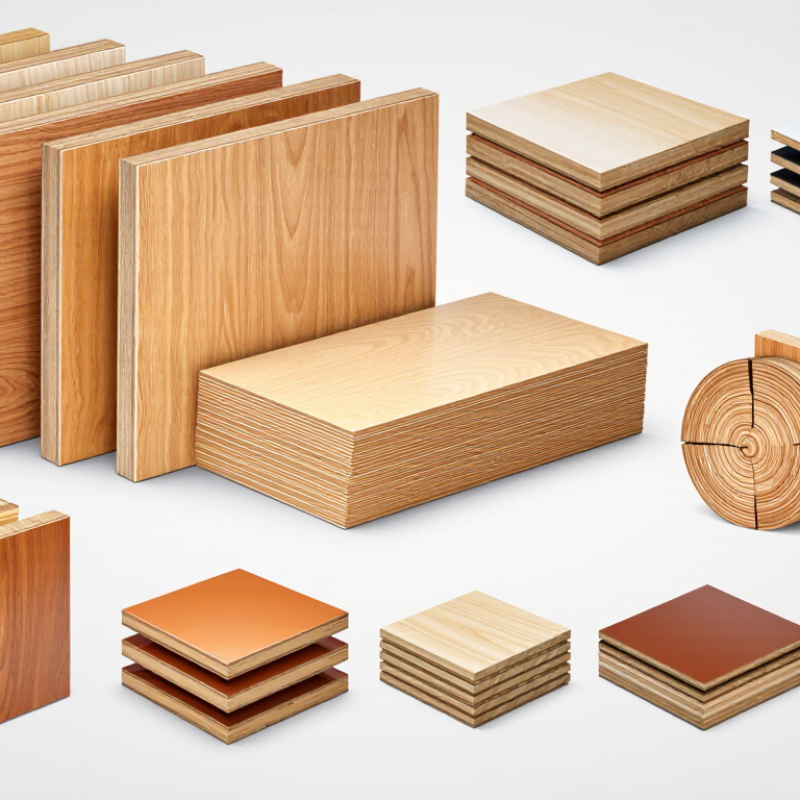
2026 Top Types of Birch Plywood for Global Buyers

Birch Plywood: Definition, Structure, and Core Manufacturing Features

Birch Plywood: Definition, Structure, and Core Manufacturing Features

Birch plywood is an engineered panel made from thin birch veneers bonded in cross-laminated layers. Each neighboring layer usually turns 90 degrees, improving dimensional stability and load distribution. The USDA Forest Products Laboratory’s Wood Handbook identifies cross-lamination as a key reason plywood performs better than solid wood in changing humidity. Birch veneer also offers a fine, uniform surface, commonly suited to furniture, interior fittings, and precision components.

Its structure varies by product type. All-birch plywood uses birch veneers throughout the panel, while combi-core plywood may combine birch face veneers with other wood species. Some manufacturers also use lighter core species to reduce weight and cost. These differences affect screw holding, edge appearance, bending strength, and machining behavior. A pale face can hide internal variation.

Manufacturing quality depends on veneer peeling, drying, grading, adhesive application, hot pressing, trimming, and sanding. The FAO and UNECE Forest Products Annual Market Review shows plywood is traded through broad global supply chains, making specifications and verification increasingly important. Buyers should check veneer thickness, layer count, moisture content, formaldehyde classification, and bonding performance against relevant EN or ASTM requirements. EN 314-2 remains a widely referenced source for plywood bond-quality classes. Laboratory data helps, but production consistency matters more in practice. I have seen panels with attractive faces but weak edges. That is a useful warning. A certificate alone cannot replace independent inspection, especially when core gaps, uneven sanding, or warped sheets affect installation.

2026 Top Types of Birch Plywood for Global Buyers - Birch Plywood: Definition, Structure, and Core Manufacturing Features

Birch plywood is an engineered wood panel made by cross-bonding thin birch veneers, usually with adjacent layers placed at right angles. Common commercial constructions use an odd number of veneers to maintain balanced panel strength and dimensional stability.

The chart shows typical veneer counts used for common nominal thicknesses. The estimate is based on approximately 1.4 mm veneers before pressing, sanding, and thickness calibration. Actual layups may vary according to manufacturing tolerances, veneer thickness, face grade, and panel specification.

Main Types of Birch Plywood Classified by Grade and Surface Quality

2026 Top Types of Birch Plywood for Global Buyers

Main Types of Birch Plywood Classified by Grade and Surface Quality

Birch plywood is commonly selected by face grade and surface quality. Under EN 635-2, B offers a clean face with very few natural defects. BB allows small knots and repaired areas. CP shows more visible patches, while C accepts open defects and stronger color variation. A B/BB panel has one premium face and one practical reverse face. BB/BB is often a balanced choice for furniture components and interior construction.

The distinction affects more than appearance. A smooth B face reduces sanding and finishing work. A CP or C face may suit packaging, hidden parts, or painted surfaces. FAO’s Global Forest Products Facts and Figures 2023 places global wood-based panel production near 400 million cubic metres. This scale makes consistent grading essential for international purchasing. However, “premium” is not a universal grade. That wording still causes confusion in real orders.

Tips: Request face-grade photos, repair limits, thickness tolerance, and moisture data. Ask whether the stated grade applies to both faces. Inspect sample edges for voids and uneven veneers. A factory certificate helps, but it cannot replace physical inspection. I have seen visually attractive sheets reveal weak core gaps after cutting. This is why buyers should test machining, not only surface appearance. For transparent specifications, reference EN 635-2 and agree on acceptable defects before production.

Birch Plywood Options Based on Core Construction and Bonding Performance

2026 Top Types of Birch Plywood for Global Buyers

Birch plywood selection depends on core construction and bonding performance, not appearance alone. The USDA Forest Products Laboratory’s Wood Handbook reports birch density at roughly 510–770 kg/m³, depending on species and moisture. This density supports strong screw holding and stable machining.

Core quality still varies. A full-birch, multi-ply core usually offers better edge strength than a mixed hardwood core. Fewer voids also improve CNC cutting and visible edge finishing. However, thicker plywood is not automatically stronger. Poor veneer layup can create weak lines inside an attractive panel. That is an easy mistake to make.

EN 314-2 classifies bonding performance into interior, humid, and exterior applications. EN 636 further separates plywood by dry, humid, and exterior service conditions. Buyers should match the grade with real exposure, not only the project label. The FAO Yearbook of Forest Products treats plywood as a distinct global trade category, highlighting how specifications must remain clear across markets.

Tips: Request a core photograph, density range, thickness tolerance, and bonding test report. Check whether the report follows EN 314-2, EN 636, or an equivalent ASTM method. For furniture, look for consistent plies and clean edges. For transport or semi-exposed structures, confirm moisture resistance and formaldehyde documentation. Small defects matter. One open core gap can weaken a routed edge, even when the surface looks flawless.

How to Match Birch Plywood Types with Global Application Requirements

2026 Top Types of Birch Plywood for Global Buyers

Choosing birch plywood should begin with the application, not the panel’s appearance. FAOSTAT’s 2023 Forestry Production and Trade data recorded more than 180 million cubic metres of global plywood production. Small specification mistakes can therefore create large waste. For interior furniture, cabinet doors, and retail fixtures, BB/BB or B/BB panels usually provide clean faces and predictable machining. Their pale surface also accepts clear finishes evenly. However, face grades do not prove structural strength. Ask for veneer-core construction, thickness tolerance, and test results.

Moisture changes the decision. For bathrooms, transport interiors, and covered outdoor structures, select panels with weather-resistant bonding, commonly tested under EN 314-2 Class 3 or an equivalent standard. Exposed façades need more than “waterproof glue.” Edge sealing, surface coating, and correct installation matter. They are often overlooked. Film-faced birch plywood suits reusable formwork because its coated surface releases concrete and reduces cleaning time. Yet the film can hide weak core gaps, so inspect cut edges and screw-holding performance.

For load-bearing floors, platforms, and vehicle components, request structural grading under the destination market’s standard, such as EN 636 or relevant ASTM requirements. Interior products should also meet the buyer’s formaldehyde limit, including applicable E1, TSCA Title VI, or CARB requirements. The U.S. Environmental Protection Agency identifies composite wood emissions as a compliance issue, not merely a comfort preference. In practice, I would never rely on a supplier’s “marine” label alone. Documents can be incomplete, and one untested assumption may outweigh a lower purchase price.

Key Buying Criteria for Selecting Birch Plywood in 2026

2026 Top Types of Birch Plywood for Global Buyers

Selecting birch plywood in 2026 requires more than checking thickness and price. The panel should match its intended use, climate, and processing method. For furniture, many buyers prefer stable multi-ply construction with a smooth, sanded face. For interior fittings, consistent thickness improves cutting accuracy and reduces assembly problems.

Check the veneer grade carefully. Clear surfaces suit visible furniture parts, while lower grades may work for hidden components. Ask for moisture content records and confirm the panel’s tolerance. A two-millimeter variation can affect CNC routing, edging, and door alignment. Small details matter.

Adhesive emissions deserve serious attention. Request current test reports, technical data sheets, and traceable production information. Requirements can differ between markets, so older documents may not be reliable. The core should show even layers without open gaps or loose sections. Press one sample edge and inspect it closely.

Packaging is another practical buying criterion. Wrapped panels need corner protection, dry storage, and stable pallet support during long-distance transport. I have seen attractive samples arrive with swollen edges after poor handling. That mistake is costly. Compare the total delivered cost, not only the factory quotation. Include inspection, packaging, freight, waste, and possible replacement panels. A cheaper grade can become expensive when rework begins. Some buyers also overlook supply consistency, although repeat orders often reveal more than one excellent sample.

Go to Top